

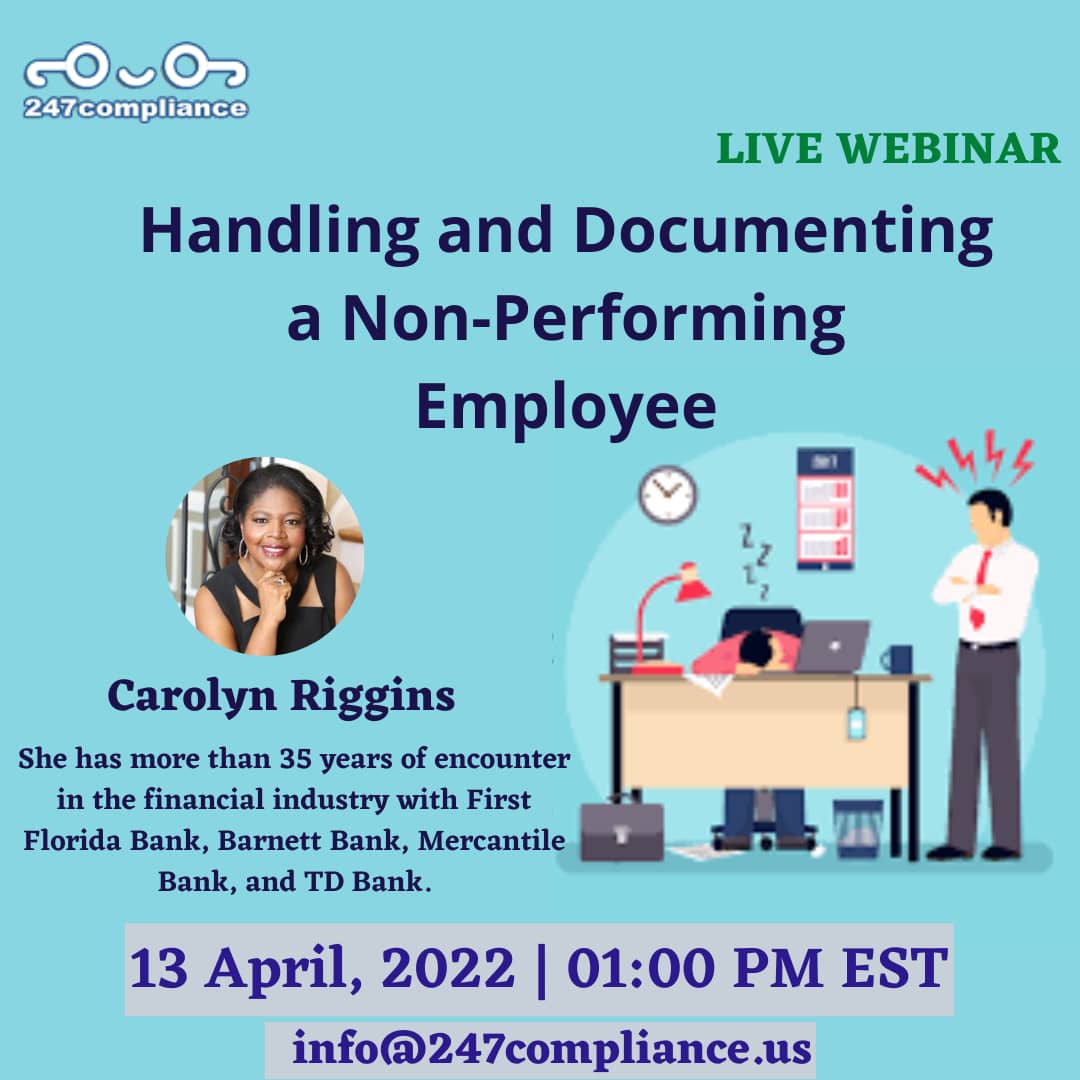
OVERVIEW
This topic will guide you on how to be aware of and identify the importance of addressing any code of behaviors concerning an employee who is not meeting the expectation of their work performance.
WHY SHOULD YOU ATTEND?
In today’s workforce environment, handling and documentation are the primary factors to your success or failure when addressing a nonperforming employee. When a non-performing employee is displaying a negative behavior that has an impact on other employees, documentation is extremely essential. In this webinar, you gain knowledge of what, when, why, and how to handle documentation concerning a non-performing employee.
LEARNING OBJECTIVES
- When is it the proper time to address the performance issues with a nonperforming employee?
- How to prepare documents for discussion with a nonperforming employee
- What is needed to document the history of a nonperforming employee?
- Why is it necessary to document an unacceptable behavior of a nonperforming employee?
- What happens when you decided to avoid dealing with the issues of a nonperforming employee?
- What actions are needed if a nonperforming employee has improved or has not improved their behavior?
- How to keep your conversation focused on the current matter when discussing a nonperforming employee’s behavior?
- Why is it critical to use the employee handbook when dealing with a nonperforming employee matter?
- How to protect the company from being in a lawsuit concerning termination or an unfavorable dismissal of a nonperforming employee?
- How to avoid the blame game of discrimination or harassment when addressing a nonperforming employee?
WHO WILL BENEFIT?
- Business Owners
- Human Resources professionals
- Managers & Supervisors
- Project Managers
- Team Leaders
- Compliance professionals
- Operations professionals
- Talent Development professionals
 Carolyn Riggins – Founder/Owners at CDR Consulting Services, Business and Management Consultant, Trainer, Speaker, Coach, Author. She has more than 35 years of encounter in the financial industry with First Florida Bank, Barnett Bank, Mercantile Bank, and TD Bank. At TD Bank, Ms. Riggins was driving and growing her client’s base relationship by $71 million through indispensable commerce development, training her employees in customer service, and repeatedly coaching on sales. Ms. Riggins represented in multiple capacity levels of management roles regarding several banks in her career path. Under her leadership, she was qualified for a vocation as an Assistant Vice President Store Manager, Vice President Hub Manager, and Vice President Retail Area Manager.